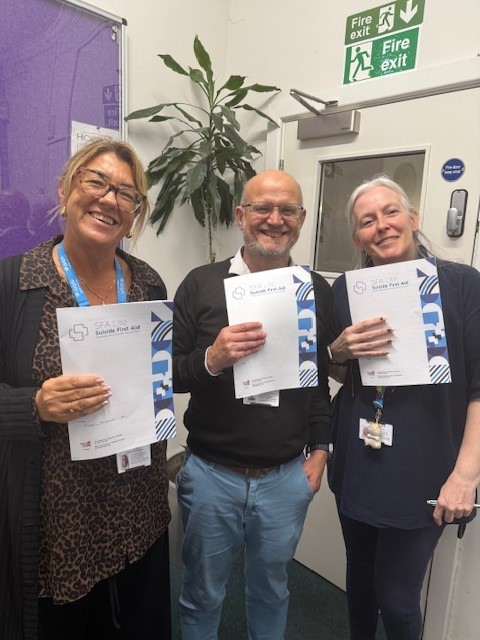
To help support life-saving conversations, colleagues at Horizon are taking part in dedicated suicide prevention training.
The course is designed to provide colleagues with the confidence and skills needed to talk about suicide and help prevent it.
Recovery Practitioner, James Wood, helped organise the training. Talking about the session, he shared: “It’s important for us to have these conversations and that the Orange Button is a beacon of hope and demonstrates that the wearer is comfortable discussing suicide.”
Once the training is complete, colleagues can wear their own Orange Button, which not only raises awareness – it encourages people to approach and open the conversation.
Horizon men’s mental health support group, Frankie’s Men’s Group, will also be taking on the training to help bring more support into the community and save more lives.
Organised by Mind Lancashire – alongside Orange Button Community Scheme, NHS Lancashire and South Cumbria and Suicide First Aid, the training is free for those who live and work in Lancashire to ensure more people are prepared to start the conversation.
Why this training matters
Suicide remains one of the leading causes of death in the UK, and rates have been rising in recent years.
Behind every statistic are families, friends and communities profoundly impacted. It’s estimated that each death by suicide leaves around 135 people bereaved or affected.
Many people experiencing suicidal thoughts show signs of distress, but often don’t know how – or who – to ask for help. This is where training makes a difference.
Training like this helps people to:
- Recognise warning signs that someone may be struggling.
- Build the confidence to start a conversation about suicide, which can be lifesaving.
- Offer support and connect people to help, whether that’s professional services or community resources.
- Reduce stigma around talking about suicide, encouraging more openness and support.
By making training widely available and visible through initiatives like the Orange Button scheme, more people in our communities will know where they can turn – and more lives can be saved.